



Colorado has 58 mountains over 14,000 feet, and if you’re new to the game, that number can feel like a dare. It isn’t. A handful of these peaks are genuinely approachable for a fit beginner with the right gear, the right weather window, and an early alarm clock. Here are the five best Colorado 14ers for beginners (and one to save for later, once you’ve got a season or two of altitude under your boots).
What Makes a 14er “Beginner-Friendly”
Before you pick a peak, know what you’re actually looking for: a well-marked trail, a trailhead that starts high (so you’re not doing all the elevation gain yourself), a round trip under 8–9 miles, and a Class 1 or Class 2 rating. Class 1 means a maintained trail, no hands needed. Class 2 means some rock scrambling and off-trail routefinding, but nothing that requires a rope. Anything above that, save for your second or third season.
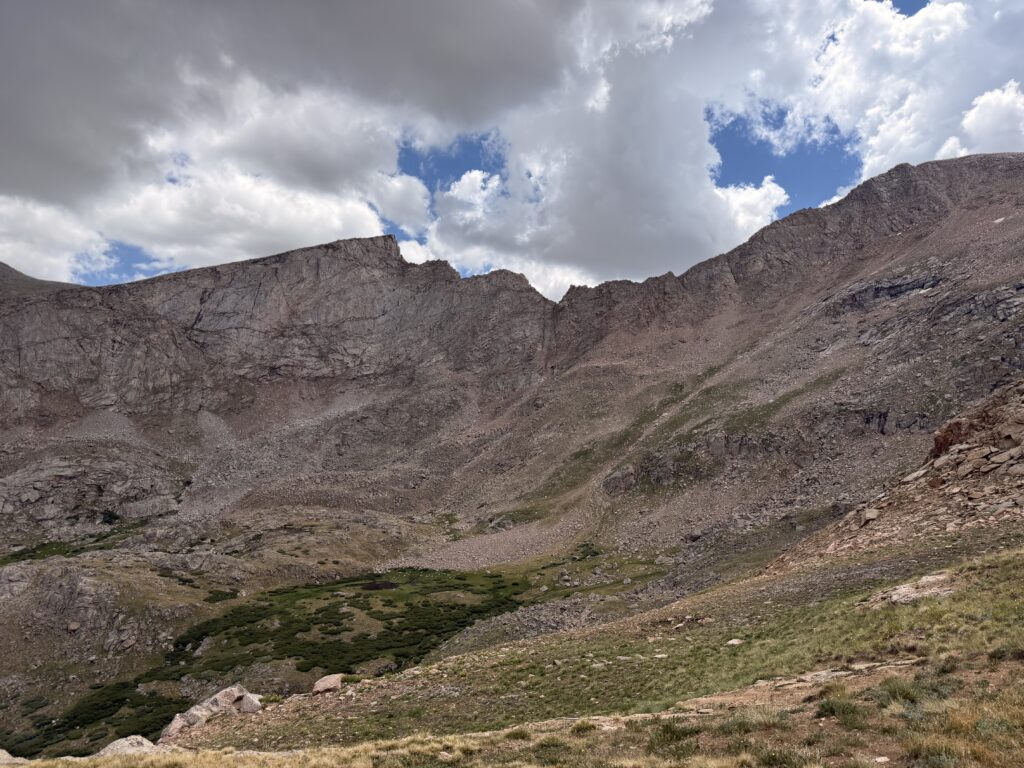
1. Mount Bierstadt — The Classic First Summit
Mount Bierstadt is where most Colorado hikers earn their first fourteener patch, and for good reason. The Guanella Pass trailhead already sits at 11,600 feet, so you’re starting well above tree line. It’s about 8 miles round trip with roughly 2,850 feet of elevation gain, rated Class 2 for a short, manageable rock scramble near the top. The trail is obvious, the crowds keep you honest on pace, and the summit views of the Sawatch and Front Range are a fair reward for an early start.
2. Grays Peak and Torreys Peak — Two Summits, One Trip
Grays Peak is a straightforward Class 1 trail — about 8.4 miles round trip with just over 3,000 feet of gain — and it happens to be the highest point on the Continental Divide. The bonus: if your legs still have something left at the top, a connecting ridge (about a mile, another 600 feet of gain) takes you over to Torreys Peak, letting you bag two fourteeners in a single outing.
Do Grays alone your first time out if you want a shorter day; add Torreys once you’re feeling strong. Or if you’re really feeling it…do both.
3. Mount Elbert — Colorado’s Highest Point
At 14,440 feet (give or take, depending on who you talk to), Mount Elbert is the highest peak in Colorado and the second-highest in the Lower 48. It’s also non-technical — a Class 1 trail the whole way. The tradeoff is length. It’s closer to 9.5 miles round trip with around 4,500 feet of elevation gain, so it’s a longer day than Bierstadt or Sherman. Start early, and treat the extra mileage as training for whatever’s next on your list.
4. Quandary Peak — The Most Popular
Quandary is arguably the most beginner-friendly fourteener in the state. It’s a Class 1 trail the entire way (meaning no scrambling and no exposure) — with an easy-to-find trailhead near Breckenridge. There’s a steady grade, and it’s about 6.75 miles round trip. If you’ve put in eight to twelve weeks of conditioning and want your first summit to feel like a reward instead of a survival exercise, this is the one.
5. Mount Sherman — Short, Steep, and Full of History
Mount Sherman is the shortcut on this list. It’s about 5.2 miles round trip, roughly half the elevation gain of Elbert, and has an old mining-era trail winding past ruins near Fairplay. It’s a Class 2 rated hike, steep in sections but short enough to knock out in a half-day, which makes it a good option if you’re still adjusting to altitude or want a lower-commitment warmup before a bigger peak later in the trip.
The One to Save for Later: Mount of the Holy Cross
If Bierstadt and Sherman start to feel easy, Mount of the Holy Cross is where the fourteeners stop being polite. It’s a 12-mile round trip with about 5,600 feet of gain — already a big day — but the real gut punch comes on the way down. The Halo Ridge and standard routes both force you to climb back up roughly 1,000 feet before you reach the trailhead, which means the “descent” includes another uphill push at hour eight or nine, after your legs have already checked out. It’s a fair, non-technical Class 2 route, but budget the whole day and treat it as a season-two or season-three peak, not a starter.
A few of our team’s personal favorite “graduation” peaks live in the Sawatch Range near Buena Vista — Huron and Mount Yale both come up often as the next step once the five above start to feel routine.
And if you’re wondering about Longs Peak (because it’s a popular one)…it’s consistently ranked among the most dangerous fourteeners in the state, with technical exposure that has nothing to do with beginner conditioning. Give yourself a couple of seasons before you put it on the list.
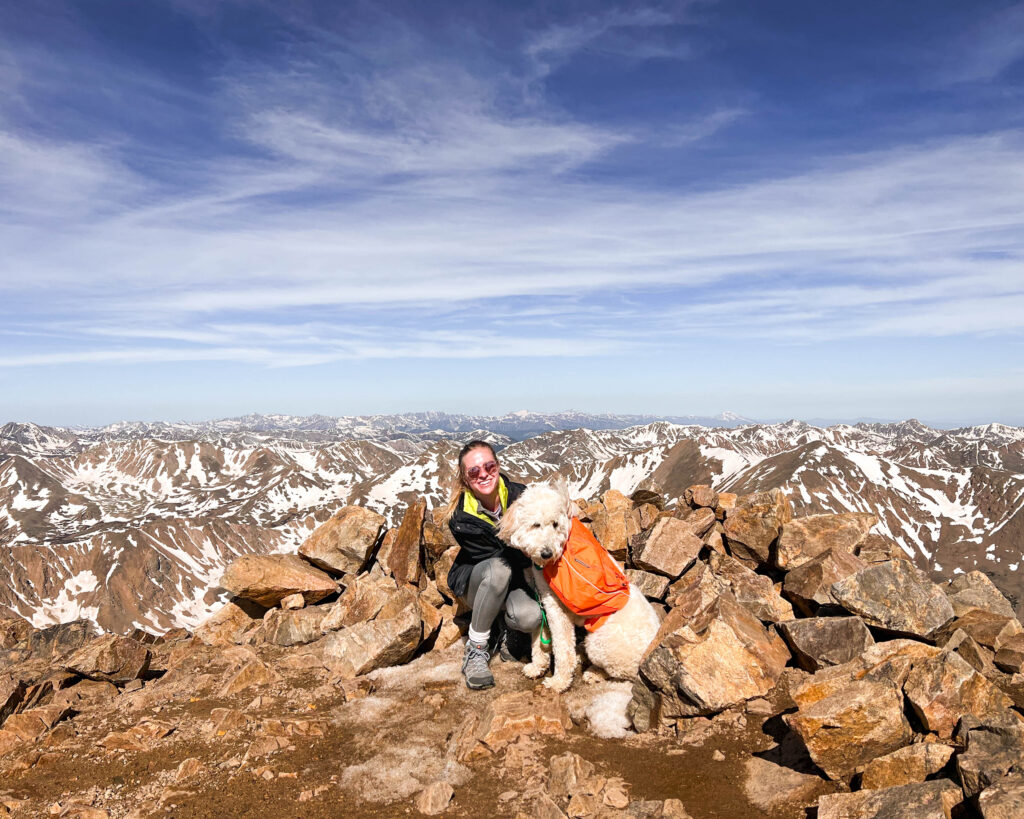
Tips for First-Time 14er Hikers
A good first fourteener is about preparation more than raw fitness. A few things that make the biggest difference:
Start absurdly early. “Alpine start” isn’t a flex — it’s how you avoid Colorado’s afternoon thunderstorms, which build almost daily in summer and turn an exposed ridge into a genuinely dangerous place to be. Aim to be on trail by 4–6 a.m. and off the summit by noon.
Give your body time at altitude first. If you’re driving up from sea level or a lower-elevation city, spend a night or two above 8,000–9,000 feet. Altitude sickness doesn’t care how fit you are, and sleeping at altitude the night before a hike is one of the easiest ways to acclimate.
Pack for four seasons in one day. Temperatures can swing 40+ degrees between trailhead and summit. Not only that, but afternoon weather can bring hail, wind, or snow even in July. Bring layers, a rain shell, gloves, and a hat no matter what the forecast says at the base.
Know your turnaround time — and respect it. Pick a hard cutoff (often early afternoon) to turn around no matter how close you are to the summit. More hikers get into trouble descending in a storm than climbing toward one.
Train before you go. You don’t need to be an athlete, but a few weeks of hiking with a loaded pack, plus some cardio at altitude if you can get it, makes a real difference on summit day. Quandary and Bierstadt are forgiving of undertrained legs; Elbert and Holy Cross are less so.
Bring the basics, every time: 2–3 liters of water minimum, high-calorie snacks, a headlamp (even for a “daylight” hike), sun protection, offline GPS tracker, and the ten essentials. Cell service is unreliable on most of these routes.
Check current conditions before you commit. Trailhead access, snow lingering on north-facing slopes, and even road closures change year to year — a route that was Class 1 in August might have a snowfield in June. Check a trip-report site or the local ranger district the week of your hike, not the month before.
Basecamp Matters More Than People Think
Most of these trailheads sit an hour or more from the nearest town, and the earlier you’re on trail, the better your weather window. That’s the whole appeal of tackling Colorado’s fourteeners out of a camper van instead of a hotel room. You can park at or near the trailhead the night before, sleep at altitude to help with acclimatization, and easily be moving by first light. An off-grid capable camper van with heat and a comfortable bed makes the difference between a good summit day and a rough one.
FAQ: best colorado 14ers for beginners
What is the easiest 14er in Colorado for beginners? Quandary Peak and Mount Bierstadt are generally considered the two easiest. That’s thanks to short mileage, manageable elevation gain, and well-marked Class 1–2 trails.
How long does it take to hike a beginner 14er? Most of the peaks on this list take 5–8 hours round trip, depending on fitness and weather. Mount Elbert and Mount of the Holy Cross take longer. A lot of this depends on fitness, experience, and personal pace.
Do I need special gear to hike a Colorado 14er? At minimum: sturdy trail shoes or boots, layers for sudden weather changes, sun protection, at least 2–3 liters of water, and a headlamp for pre-dawn starts. Trekking poles help on the steeper, looser sections.
When is the best time to hike Colorado 14ers? Late June through early September, once snow has cleared from most standard routes. Always check current trail conditions and start early to be off the summit before afternoon thunderstorms roll in.