
“How long can I go without plugging in?” is one of the top three questions we hear from every prospective buyer. The short answer: longer than you think. The real answer depends on your battery capacity, your usage habits, and how much sun you’re getting.
Here’s the full picture.
Three Ways Your Battery Charges
Before we dive into the details of how long the battery lasts, it’s important to understand that your battery isn’t just draining, it’s also constantly being replenished through three sources: solar panels, your van alternator, and shore power.
Solar Panels
Solar works best with direct, overhead sunlight, but your system is collecting energy anytime there’s daylight. On a clear day, your panels are actively charging throughout most of the day, helping keep your battery topped off while you’re parked.
Alternator (DC-DC Charger)
Your van charges while you drive, which is one of the most reliable ways to replenish power. Even a few hours on the road can significantly recharge your system with the DC-DC charger, making it a key part of everyday use.
Shore Power
When plugged into a campground or standard outlet, shore power provides the fastest and most consistent charge. It’s a great option when you want to fully top off your system or stay plugged in for extended periods.
Most owners use a combination of solar and driving to keep their batteries charged and rarely need to rely on shore power (and prefer not to). The system is designed to stay topped off over time, rather than cycling from full to empty.
Solar Specs by Package
Your solar capacity depends on your trim level:
• Trailhead: 200W solar standard (upgradable to 400W)
• Backcountry: 400W solar standard
• Portable solar: Adds another 400W to either option, for up to 800W total
All 2026 models come standard with self-heating lithium batteries, which means the batteries charge and perform well even in cold weather.
Off-Grid Duration by Battery Capacity
How long you can stay off-grid depends largely on your battery capacity and how you use your van day to day.
With standard loads (lights, phone charging, induction stove, refrigerator) and no AC, this is what it would look like:
• 200Ah: 2–3 days with no driving or solar input
• 300Ah (standard in our Trailhead builds): 4–6 days depending on usage
• 600Ah (standard in our Backcountry builds): A week or more for most owners. Full-time owners who drive regularly and have solar report rarely dipping below 70% battery.
However, there is an option to upgrade your battery power to an off-grid living situation. This would give you more than double the battery capacity in our vans.
• 600Ah–1,200Ah: Extended off-grid living with minimal concern. Even with heavier usage, you’ll have days of capacity before needing to recharge.
AC: The Biggest Power Draw
Air conditioning is by far the largest drain on your battery system in the van. On a full charge with AC running continuously, here is what your breakdown will look like:
• 400Ah: approximately 8–10 hours
• 600Ah: approximately 12–15 hours
• 1,200Ah: multiple days of AC runtime, even in hot conditions
Most owners don’t run AC continuously. A few minutes before bed to cool down the space is usually enough and a lot of times even that is unnecessary. If you’re in a hot climate or traveling with pets that need constant climate control, the larger battery options give you the headroom to run AC without worrying about your battery levels.
What Does Normal Usage Look Like?
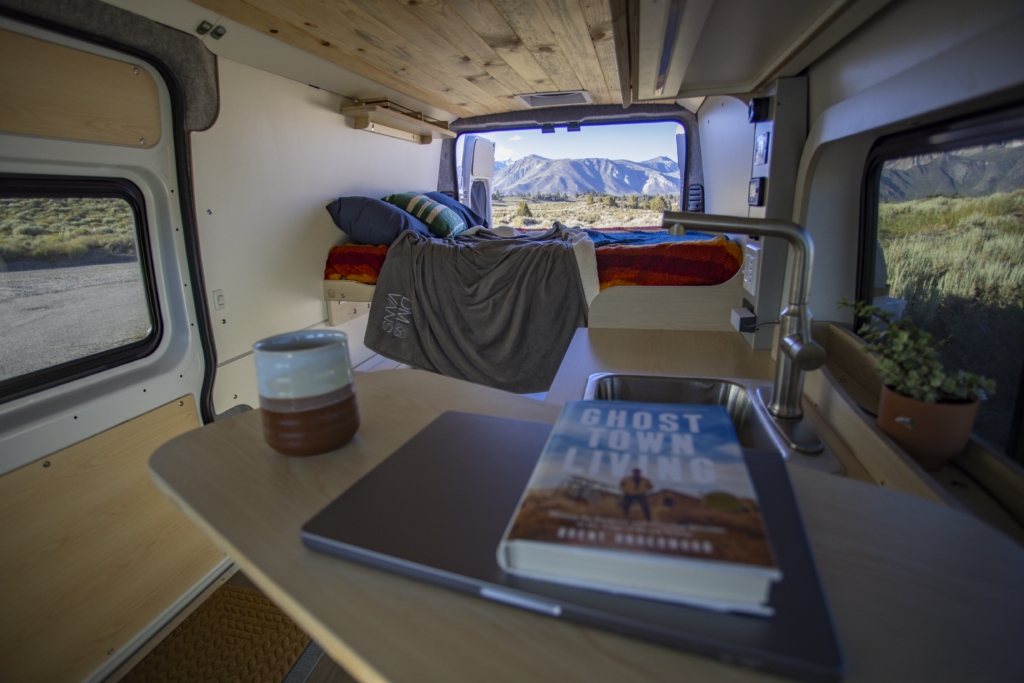
Normal usage can vary from person to person, but most owners tend to use their vans in very similar ways day to day. A typical day for a full-time van lifer might include:
• Refrigerator running 24/7
• Charging a phone and laptop
• Running Starlink for internet
• Using the induction cooktop for meals
• LED lights in the evening
• Running the Peak Heating System overnight in cold weather
With 300Ah of battery and solar panels working during the day, this kind of usage barely makes a dent. Full-time owners report rarely dipping below 70% battery with this lifestyle…and that’s without plugging in.
Cold Weather Considerations
The Peak Heating System runs off the van’s gas tank and uses very little electrical power, so heating doesn’t drain your battery significantly. Solar is less effective in cloudy or short winter days, but driving recharges efficiently through the alternator. The self-heating lithium batteries in 2026 models charge and perform well in cold temperatures where standard lithium batteries would struggle.
The Bigger Battery Options Eliminate the Question Entirely
With the 2026 lineup’s battery option upgrades (up to 1,200Ah), power management essentially becomes a non-issue. You stop thinking about battery percentage the same way you stop thinking about your phone battery when you have a good charger because it’s just always there.
The larger options are especially worth considering if you plan to run AC regularly, work from the van with multiple devices, or simply never want to think about power (which is definitely a perk when living in a van!).
See What’s Included in Your Build
Battery and solar specs vary by model and trim level. Use the van builder on our website to see exactly what’s included in any configuration, and schedule a consultation call if you want help sizing your electrical system to your lifestyle.